

L'Univers FOODHUB · Guide
Sashimi & Tataki: The Complete Guide from Cutting to Tasting
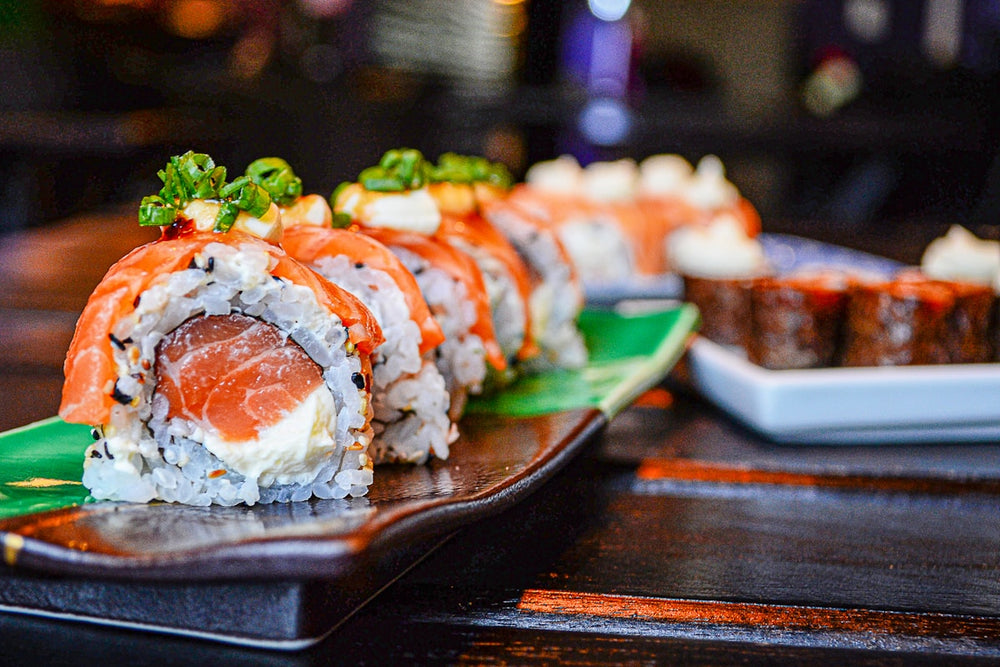
Perfect sashimi or a well-executed tataki is not just about "nicely sliced raw fish." Behind the apparent simplicity lie precise decisions: choice of fish, quality of flesh, cutting technique, temperature, sauce. This guide provides a complete method for making these two Japanese classics at home.
At FOODHUB, we work with products that make a difference: barrel-aged soy sauces, Kurozu Kakuida vinegars, Horiuchi sesame oils. This guide explains how to use them to complement raw fish.
Sashimi vs. Tataki: The 2 Techniques Explained
Sashimi
Sashimi is thinly sliced raw fish, served as is. No cooking, no marinating. Its quality relies entirely on three pillars: extreme freshness of the fish, precision of the cut (which determines the texture in the mouth), and the accompanying sauce. Sashimi is enjoyed with fresh wasabi and a dash of Japanese soy sauce, never drowned.
Tataki
Tataki is a quick sear ("to sear" in old Japanese). The fish – bonito, tuna, salmon – is seared on all sides for 5 to 15 seconds to develop an aromatic crust while keeping the center raw. Often briefly marinated after cooking in a ponzu sauce (citrus + soy sauce), it offers a contrasting texture: fragrant crust, melting flesh.
The practical difference: sashimi requires strict "sashimi-grade" fish. Tataki allows a little more leeway as the searing fixes the proteins on the surface.
Choosing Your Fish: The 3-Criteria Rule
1. Freshness (Day J or Day J+1 at most)
Fish intended for raw consumption must have been recently caught and stored at a controlled temperature (0 to 2 °C). Three visual indicators: the eyes should be bright and bulging (not sunken), the gills should be bright red (not brown), and the flesh should spring back when pressed with a finger.
2. Origin and Traceability
"Sashimi quality" fish comes from monitored channels: selective fishing, rapid killing (ikejime in Japan), freezing at very low temperatures for a minimum of 24 hours to eliminate the risk of parasites (anisakis). Always ask for "sashimi grade" or a guarantee of freezing at -20 °C / 24 hours minimum.
3. Most Suitable Species
Bluefin tuna or skipjack (the base), salmon (North Atlantic), sea bream, sea bass, royal sea bream, mackerel, bonito, yellowtail. Avoid very fatty untreated species (raw eel), wild freshwater fish (high parasite risk), and protected species.
The Knife and the Cut
A Japanese knife with a long, thin, and asymmetrical blade radically changes the quality of the cut. Three main knives:
- Yanagiba (柳刃): the long blade (24-30 cm), sharpened on one side. The quintessential sashimi knife. A single clean pass from heel to tip.
- Deba (出刃): thick blade for filleting and cutting through bones.
- Usuba (薄刃): thin blade for vegetables (fine daikon julienne as garnish).
The "hira-zukuri" cut
The standard technique. Blade slightly angled, pull the knife towards you in a single pass, never saw. Target thickness: 7 to 10 mm for bluefin tuna, 5 to 7 mm for salmon, 3 to 5 mm for sea bream. The firmer the flesh, the thicker the slice can be.
The "usu-zukuri" cut
The ultra-thin cut (1-2 mm) for firm-fleshed fish like sea bream or fugu. Slices are arranged in a rosette on the plate to reveal the underlying pattern.
The Sauces: 3 Essentials to Master
Simple Soy Sauce
A great Japanese soy sauce, barely poured into a small dish. No sugar, no additives. Sashimi is barely dipped; it's put on the flesh, never on the rice side if applicable. Kaneiwa soy sauce aged 3 years in a barrel brings the level of umami that justifies the gesture.
Homemade Ponzu
3 tablespoons soy sauce + 3 tablespoons yuzu juice (or lemon + a little mandarin) + 1 tablespoon mirin + 1 piece of kombu + a pinch of katsuobushi. Infuse for 24 hours in the refrigerator, then strain. Keeps for 1 month. The perfect sauce for tataki.
Wasabi-Kurozu Sauce
Signature sauce: 2 tablespoons Kurozu, 1 teaspoon fresh grated wasabi, 1 teaspoon soy sauce, a pinch of brown sugar. For rich sashimi (fatty tuna, yellowtail). Kurozu Kakuida 5 years provides a richness that white rice vinegar never will.
5 Essential Recipes to Explore
To put into practice, these 5 Journal recipes cover the essential techniques:
- Tuna Tataki, Sesame and Ponzu, the classic version.
- Bonito Tataki, the Japanese balance.
- Naruto Sea Bream Sashimi (Michelin recipe).
- Marinated Mackerel Sashimi.
- Tuna Sashimi, chefs' signature.
Classic Garnishes ("Tsuma")
Three elements traditionally accompany sashimi:
- Fine julienned daikon: cleans the palate between bites.
- Shiso: aromatic leaf under the fish, natural antibacterial.
- Fresh wasabi: grated in a tiny amount, placed on the flesh, never mixed with the sauce.
FAQ, Sashimi & Tataki
Can you make sashimi at home?
Yes, provided three rules are followed: 1) buy "sashimi-grade" fish from a fishmonger or online, 2) store it at 0-2 °C until consumption (no more than 24 hours), 3) slice on a clean board with a disinfected knife.
Should fish be frozen before eating raw?
In France, regulations require freezing at -20 °C for at least 24 hours for fish intended to be eaten raw, unless the cold chain at 0 °C has been maintained since fishing (specialized fishmongers). In practice, freeze at -20 °C for 24 hours in a vacuum-sealed bag if you buy standard fresh fish.
How much per person?
For a starter: 80 to 100 g of fish per person (4 to 6 slices). For a main course: 150 to 200 g per person (8 to 12 slices), accompanied by vinegared rice.
Sashimi and pregnancy: possible?
No, raw fish consumption is not recommended during pregnancy due to the risk of listeriosis and anisakiasis. Prefer cooked fish. The same applies to immunocompromised individuals.
Is Norwegian salmon safe for sashimi?
Yes, farmed North Atlantic salmon is raised in closed systems without contact with wild marine parasites. Almost all salmon sashimi served in the West comes from this source.
Available on FoodHub
Sashimi & Tataki, FoodHub selection
🐟 Smoked Scottish Salmon 10 slices 500g38,10 € Add to cart →
🍣 Smoked Scottish Salmon Fillet Heart 250g23,10 € Add to cart →
🍣 Saku Japanese Bluefin Tuna Akami 600g56,40 € Add to cart →
Les coulisses, les arrivages et les recettes en vidéo :
@foodhubsupply


