L'Univers FOODHUB · Guide · Wagyu
How a Wagyu Is Born: Thirty Months of Rearing
Thirty months for a slice cooked in one minute. A name at birth, bottle-feeding, twenty months of fattening: where marbling is born.
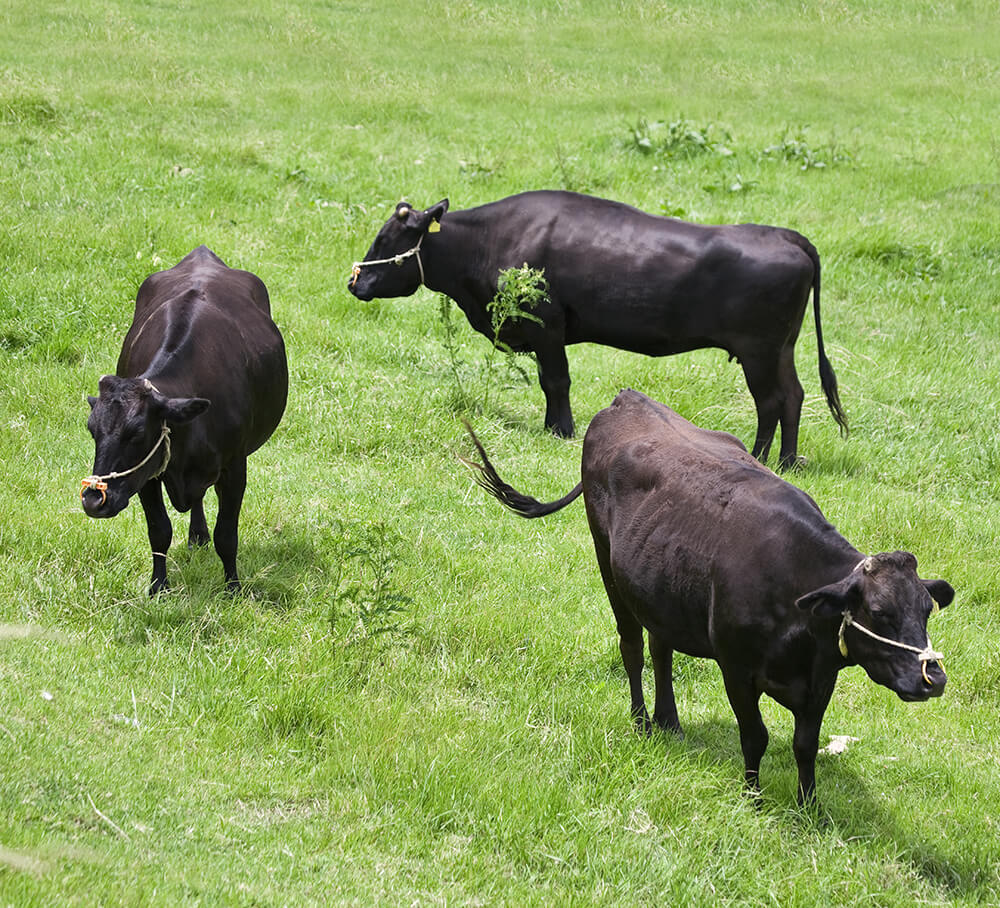
Thirty months. That is how long it takes to produce the slice you will sear for one minute per side. In between: a calf with a name, a breeder who bottle-feeds it, and twenty months of fattening where everything is decided. Here is the journey, step by step.

Wagyu are raised in small, individualized barns, not in mass feedlots.
1. Birth, and a name
Every animal is given an individual name at birth. This isn't folklore: it reflects a model in which breeders follow their animals one by one, in small herds, whereas industrial farming thinks in batches.
Mothers and pregnant heifers are put out to pasture, because a mother who moves gives birth to a sturdier calf.
2. The first months, on the bottle
The calf is weaned early, then fed milk replacer individually, by hand. When the cold sets in, some farms dress it in a made-to-measure blanket. It is a real practice, and it says a lot about how these breeders relate to their animals.
It stays seven to ten months with the cow-calf breeder before being presented at the calf market.
3. Fattening, where marbling is born
The young animal then moves to a fattening farm for about twenty months. Its feed combines forage, rice straw, concentrates and whole-crop silage. The latter is decisive: it is what develops the marbling and gives the fat its white color.
In other words, the famous marbling isn't just a matter of genetics. It is genetics plus twenty months of carefully controlled feeding.

Marbling is built during fattening, not at birth.
4. Aroma, a measurable phenomenon
Wagyu has an aroma all its own, a sweet scent reminiscent of peach and coconut, perceived retronasally while chewing. Two facts follow directly for cooking:
- This aroma is released most strongly at around 80 °C, which is exactly the temperature of sukiyaki.
- Once released, it stays trapped in the meat and comes back as you chew, even cold. That is why cold Wagyu holds up, while most meats lose everything.
Our recipes for cold Wagyu and sukiyaki bowls are built on these two facts.
5. Oversight, from pasture to plate
Three systems govern the whole process:
- Individual identification. A law requires a unique number for each animal, with date of birth, sex, lineage, successive farms and slaughterhouse, all publicly searchable.
- Grading. It is carried out by the Japan Meat Grading Association, according to national standards covering quality, color and yield.
- Pedigree. A dedicated association registers the animals and runs the breed improvement program.
The official video
Video published by the Japan Livestock Products Export Promotion Council.
Frequently asked questions
How long is a Wagyu raised?
About thirty months from birth to sale, including some twenty months of fattening.
Is marbling genetic?
Only partly. Genetics provides the potential, feeding realizes it: whole-crop silage plays a decisive role.
Why is Wagyu good even cold?
Because its aroma, once released by cooking, stays in the meat and comes back as you chew.
Can you verify the origin of a piece?
Yes, thanks to the individual ten-digit identification number, searchable in the Japanese database.
Further reading
- Buying authentic A5 Wagyu: the guide
- The competition that ranks the prefectures
- Which cut for which cooking method?
Our cuts, with their origin number


Facts, figures, images and video: J-LEC, Japan Livestock Products Export Promotion Council.
Les coulisses, les arrivages et les recettes en vidéo :
@foodhubsupplyÀ lire aussi · Wagyu