L'Univers FOODHUB · Guide · Wagyu
Which Wagyu Cut for Which Cooking Method?
Eight families of cuts, eight ways to cook them. The rule: the more marbled the cut, the shorter the cooking. With a decision table.
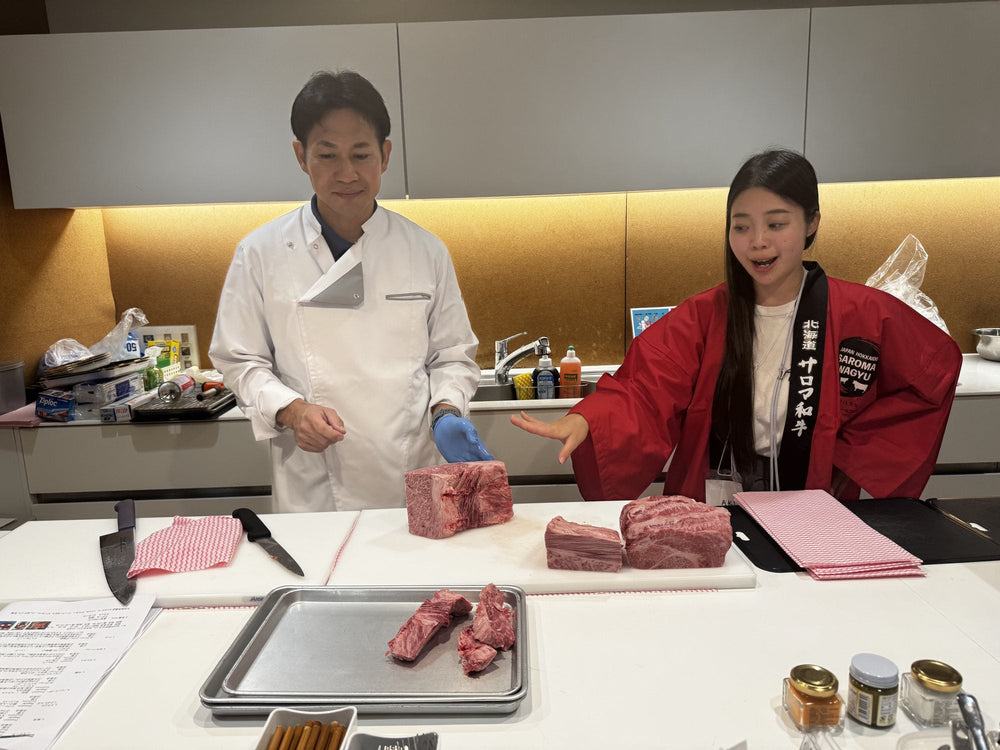
In Japan, nobody asks for “Wagyu”: they ask for a cut. Striploin isn't cooked like chuck, and rump has no business in a shabu-shabu. Here is the complete map: eight families of cuts, what each one is worth, and the cooking method that suits it.

The rule in one sentence
The more marbled the cut, the shorter the cooking. The more sinewy it is, the longer the cooking. Everything else follows from that.
The eight families
Japanese classification groups the cuts into eight families: striploin, chuck roll, rib, flank, rump, top round, shank and ground meat. Each has its uses, and this is how the fifty recipes published by the Japan Livestock Products Export Promotion Council are organized.
1. Striploin and ribeye: cooked in seconds
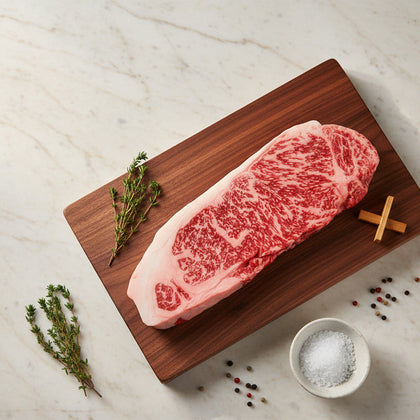
The most marbled, and therefore the most delicate. Their fat melts below body temperature: any prolonged cooking leaves it all in the pan.
- Steak: 1.5 cm, one minute per side, two minutes' rest.
- Shabu-shabu: 1 to 2 mm, three seconds in a broth at 85 °C.
- Seared nigiri: 2 mm, three seconds of blowtorch per side.
- Sukiyaki: thin slices, ten seconds at 80 °C.
Avoid: braising, stewing, grinding.
2. Chuck roll: the cut for rolls
Less expensive, still well marbled, with more chew. This is the cut for rolls wrapped around a vegetable, miso stir-fries, spicy skewers and generous sandwiches. It takes one minute more than striploin without drying out.
3. Rib: the roasting cut
A large piece, cooked gently and then seared. This is the cut for a roast and for the bone-in centerpiece brought to the table: indirect cooking to 50 °C at the core, then a final sear.
4. Flank: the chefs' cut
Long fibers, pronounced flavor, reasonable price. It needs fierce heat and slicing across the grain, or it stays stringy. Rolls, gratins, croquettes, short braises in wine.
5. Rump: the king of tataki
Lean, tender, consistent: it is the ideal cut for tataki, seared thirty seconds per side and then chilled, and for short simmered dishes like nikujaga. It is also the best value when you want to taste Wagyu without paying the price of an A5 striploin.
6. Top round: the cold roast
Lean and tight-grained. It shines as a roast served cold, in thin slices, or in a warm salad. Quick cooking toughens it: a gentle oven, then a long rest.
7. Shank: the slow-cooking cut
Rich in collagen, it turns meltingly tender after two to three hours. This is the cut for stews, curries, tomato braises and pot roasts. An A5 piece would add nothing here: save your budget for the striploin.
8. Ground meat: yes, but not with A5
Bolognese, croquettes, menchi-katsu, quiches. Grinding destroys the marbling: so you grind the less noble cuts, never a piece graded A5.
The decision table
| Cut | Cooking | Thickness | Recipe |
|---|---|---|---|
| Striploin | 1 min / side | 1.5 cm | Steak |
| Striploin | 3 s at 85 °C | 1 to 2 mm | Shabu-shabu |
| Ribeye | 1 min / side | 2 cm | Charcoal grill |
| Chuck roll | 2 min | 2 mm | Vegetable rolls |
| Bone-in rib | Indirect, 50 °C | Whole piece | Table centerpiece |
| Rump | 30 s / side | 3 cm | Tataki, served cold |
| Shank, chuck | 2 h 30 min to 3 h | 5 cm cubes | Dutch-oven braise |
Three costly cut mistakes
- Braising an A5. Three hours of cooking make the marbling disappear: you might as well buy chuck.
- Grinding a noble cut. The grinder destroys the structure of the fat.
- Slicing flank with the grain. The best cut in the world turns rubbery.
Frequently asked questions
Which cut to discover Wagyu?
A 200 g striploin: the most versatile, and the closest to what people picture when they think of Wagyu.
Which cut to entertain without breaking the bank?
Rump or chuck roll, as tataki or rolls: you stretch the quantity without losing the aroma.
Should you buy a whole piece?
If you are equipped to slice and you entertain often, yes: the price per kilo drops significantly. Otherwise, 200 g portions avoid waste.
How do you ask for the right cut?
By use, not in millimeters: “shabu-shabu cut,” “sukiyaki cut,” “steak thickness.” These are the terms butchers recognize.
Further reading
- Buying authentic A5 Wagyu: the guide
- Pan-searing an A5 Wagyu
- Kobe or A5: one is an address, the other a grade
Our available cuts


Source for the classification by cut: J-LEC, Japan Livestock Products Export Promotion Council.
Les coulisses, les arrivages et les recettes en vidéo :
@foodhubsupplyÀ lire aussi · Wagyu