L'Univers FOODHUB · Guide · Wagyu
How to Cook A5 Wagyu in a Pan: The 6-Step Method
A very hot cast-iron or carbon-steel pan, no added fat, one minute per side and two to three minutes of rest: the 6-step method for cooking A5 Wagyu.
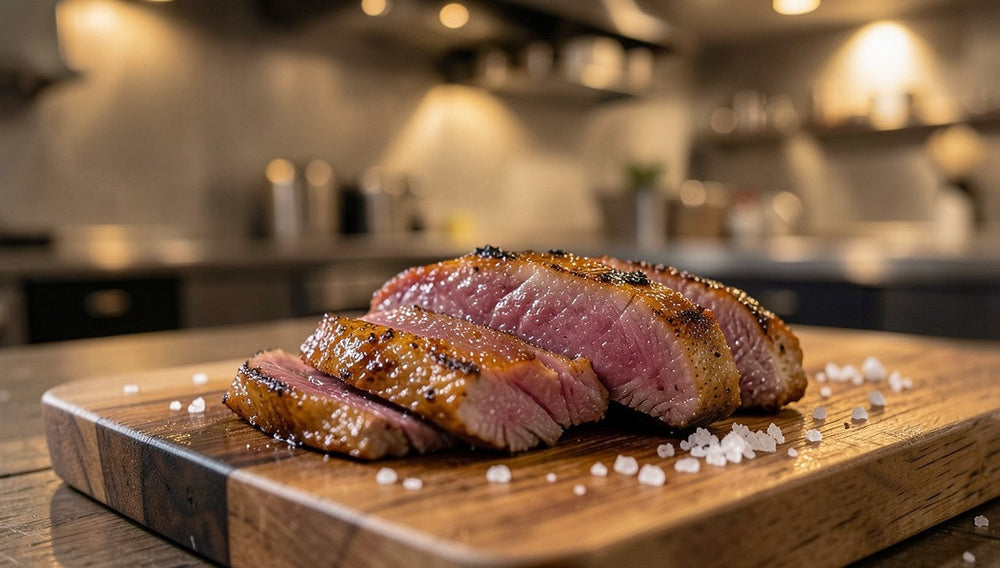
A5 Wagyu is not cooked like a French ribeye. Its fat melts below body temperature: the very quality that makes the meat so meltingly tender can also drain it of its substance in a few seconds too many. The rule fits in one sentence: high heat, short time, no added fat.
What you need before you start
A cast-iron or carbon-steel pan, never nonstick: you need a surface that gets very hot and stays hot when the meat goes in. A thermometer is useless here — the cue is visual.
Take the meat out of the refrigerator 20 to 30 minutes ahead. Then pat the surface dry with paper towels: a damp surface steams instead of browning, and the crust never forms.
Cut thickness
For a steak, cut it 1.5 to 2 cm thick. Any thinner and the fat melts before the crust has time to form, leaving nothing but dry meat.
For Japanese preparations, it is the opposite: sukiyaki and shabu-shabu call for very thin slices, which cook in a few seconds in a simmering broth. In fact, it is at around 80 °C — the temperature of sukiyaki — that Wagyu’s aroma comes through best.
Fat first
Stand the steak on its fat cap for about thirty seconds to render some of it. That rendered fat is your cooking fat. The pan stays bare: no oil, no butter.
The sear
One minute per side, over high heat, without moving the meat. Moving it prevents the crust from forming.
The cue is simple: the Wagyu is ready when the sheen on the surface disappears under a thin golden crust. Salt just before cooking and pepper afterward: pepper burns in a pan this hot.
The rest
2 to 3 minutes on a warm plate. This step is non-negotiable: without resting, the juices run onto the plate instead of staying in the meat.
Slicing and seasoning
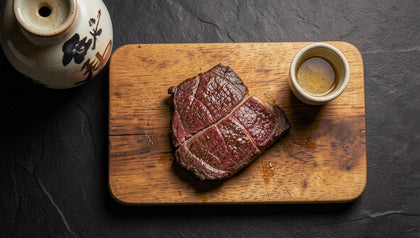
Slice thinly, against the grain. A good salt is all you need. If you want to go further: a drop of artisanal soy sauce, or a touch of fresh wasabi. No sauce — it would mask the aroma, that sweet, almost coconut-like fragrance that makes this meat so prized.
Costly mistakes
- Adding oil or butter. The fat in the meat is more than enough.
- Cooking it medium. Past rare, the fat has melted and the texture is gone.
- Serving thick slices. Wagyu is served thinly sliced.
- Starting with cold meat. The center stays raw while the outside is already overcooked.
- Salting hours ahead. Salt draws out moisture and prevents browning.
Frequently asked questions
What doneness should I aim for?
Rare to blue. It is the only doneness that preserves the marbling: beyond that, the fat melts and the meat turns dry.
Can I cook it in the oven?
It is not recommended. Prolonged dry heat melts the fat before the outside browns. A very hot pan, or hot coals, give a far better result.
What about a plancha?
Yes — same method, same timings, still with no added fat.
How much per person?
80 to 120 g as a main course, less for a tasting. A5 Wagyu is filling.
Further reading
- Buying authentic A5 Wagyu: the guide
- Recipe: grilled A5 Wagyu skewers
- The traceability of our Japanese Wagyu
Cuts to order


Les coulisses, les arrivages et les recettes en vidéo :
@foodhubsupplyÀ lire aussi · Wagyu