

L'Univers FOODHUB · Article
Umami, the fifth taste explained by Japanese chefs
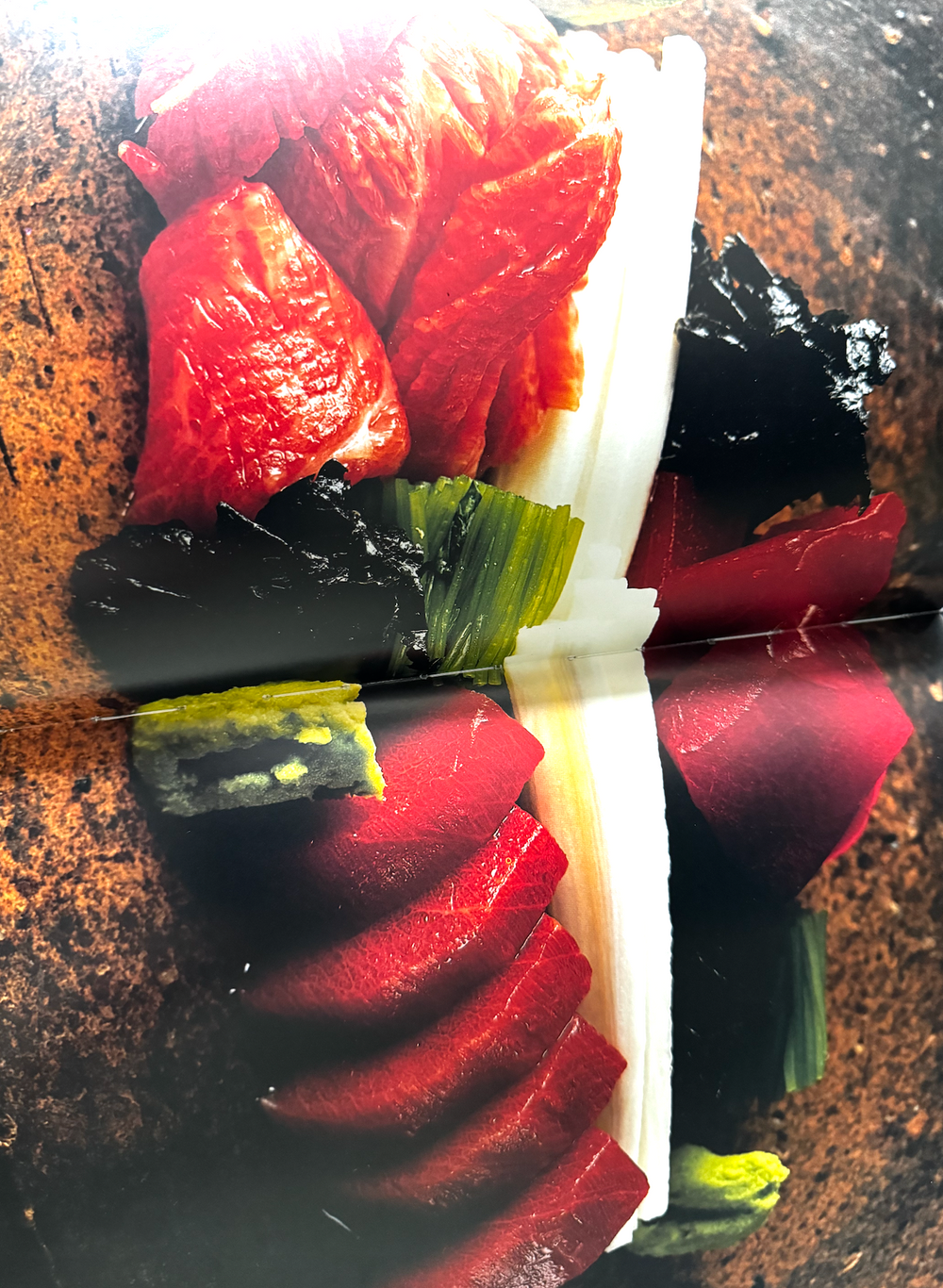
You've felt it before without knowing how to name it. That deep, round, almost tactile sensation in your mouth that transforms a perfectly ripe tomato into a revelation and a chicken broth into a Proustian madeleine. This taste is neither sweet, nor salty, nor sour, nor bitter. It's umami, the fifth taste, first identified in 1908 by a Japanese chemist, and which has since transformed global culinary science.
At FOODHUB, umami is at the heart of several of our artisan selections: Kaneiwa soy sauce aged in barrels, Kurozu Kakuida vinegar, natural dashi. This guide explains what umami truly is, why it changes everything in cooking, and how to invoke it at home with the right products.
What is umami?
The word "umami" (旨味) literally means "savory taste" in Japanese. It was coined in 1908 by Kikunae Ikeda, a professor of chemistry at Tokyo Imperial University. Intrigued by the particular flavor of dashi, the Japanese broth made from kombu seaweed and dried bonito, Ikeda isolated a compound responsible for this distinct sensation: monosodium glutamate, a molecule naturally present in many foods.
His hypothesis: alongside sweet, salty, sour, and bitter, there exists a fifth fundamental taste, perceived by specific receptors on the tongue. For nearly a century, umami remained a Japanese curiosity. It was not until 2000 that American researchers (Chaudhari, Roper) identified the T1R1/T1R3 taste receptors, scientifically confirming umami as a primary taste. Since then, it has become part of the vocabulary of all great chefs worldwide.
The science behind the flavor
Umami results from the presence of three main compounds in food:
- Glutamate: an amino acid found in kombu seaweed, ripe tomatoes, Parmesan cheese, soy sauce, shiitake mushrooms.
- Inosinate: a nucleotide abundant in dried bonito (katsuobushi), sardines, aged beef.
- Guanylate: a nucleotide present in dried mushrooms, especially shiitake and porcini.
The secret: these compounds act in synergy. Glutamate alone already provides umami. But combined with inosinate or guanylate, the intensity of perception is multiplied by 7 to 8. This is why traditional dashi combines kombu (glutamate) and bonito (inosinate): the combination creates an explosion of flavor that no single ingredient could achieve on its own.
The four other tastes: why umami is different
The sweet, salty, sour, and bitter tastes each have a clear biological function:
- Sweet signals energy (carbohydrates).
- Salty signals necessary electrolytes.
- Sour warns of ripeness or fermentation.
- Bitter warns of potential toxins.
Umami, on the other hand, signals the presence of protein. When a food releases free glutamate, it means it contains partially digested or fermented proteins. Our brain identifies this signal as a deep nutritional "richness," which explains the satiety and well-being felt. This is why long-simmered broths, aged cheeses, or fermented sauces provide satisfaction comparable to a "complete" dish.
The 12 essential umami products to know
Umami is naturally found in dozens of foods. Here is a selection of the 12 must-haves, in order of intensity:
1. Kombu
Japanese laminaria seaweed. Absolute champion of free glutamate (≈ 2,240 mg / 100 g). The base of traditional dashi. Soaked for 30 minutes in cold water, it releases a clear, deeply umami broth.
2. Dried Bonito (katsuobushi)
Skipjack tuna fillets smoked, fermented, and dried for 6 months. Shaved into thin flakes, they add inosinate which enhances the glutamate in kombu.
3. Japanese Soy Sauce
The long fermentation of soybeans, wheat, and salt by Aspergillus oryzae naturally produces glutamate, inosinate, and guanylate. Kaneiwa soy sauce aged 3 years in wooden barrels exemplifies this unparalleled level of aromatic intensity.
4. Miso
Fermented soybean paste. The longer the miso ferments (12 to 36 months), the higher the concentration of free glutamate. Essential in miso soup, but also for glazing fish and vegetables.
5. Ripe Tomato
The Western vegetable champion of umami. A ripe tomato contains up to 250 mg of free glutamate / 100 g. It's the key to simmered Italian sauces.
6. Aged Parmesan
A 36-month-old Parmesan contains ≈ 1,200 mg of free glutamate / 100 g, one of the most intense umami products in the world. This is why a simple grating transforms a plate of pasta.
7. Kurozu Vinegar
Black brown rice vinegar fermented in traditional jars (sometimes for 5 years) develops a unique concentration of umami amino acids. Kurozu Kakuida 5 years old is the purest example.
8. Dried Shiitake Mushrooms
Drying concentrates guanylate. Rehydrated shiitake add a woody and earthy depth to any broth.
9. Anchovies
Fillets in brine or oil. Fermentation releases glutamate and inosinate. Melted into a tomato sauce, they visually disappear but radically transform the dish.
10. Aged Iberian Ham
A 36-month Bellota concentrates up to 340 mg of free glutamate / 100 g. Long aging develops umami in the same way as aged cheeses.
11. Aged A5 Wagyu
Exceptional marbling and dry-aging release free glutamate. A5 grade 5 Wagyu expresses this meaty umami in all its roundness.
12. Wakame Seaweed
A more delicate variant of kombu. Ideal in soups, salads, and as a garnish for sashimi.
How to cook umami: 5 golden rules
Rule 1: Combine glutamate + inosinate (or guanylate)
This is the principle of dashi. In Western cuisine: tomato (glutamate) + anchovies (inosinate). Or Parmesan (glutamate) + chicken broth (inosinate). The synergy multiplies the intensity by 7 or 8.
Rule 2: Prioritize fermented or aged ingredients
Soy sauce, miso, Kurozu vinegar, aged cheeses, long-matured hams, traditional balsamic vinegars: all concentrate umami through slow enzymatic fermentation.
Rule 3: Cook slowly over low heat for a long time
Broths simmered for 4 hours, stews, and stock bases gradually release glutamate from proteins. Conversely, rapid cooking at very high temperatures degrades these compounds.
Rule 4: Reduce to concentrate
Any reduction of juices, stock, or sauce mechanically concentrates umami compounds. This is the basis of classic "grandmother" sauces.
Rule 5: Sprinkle as a finishing touch
A dash of soy sauce, a grating of Parmesan, a few flakes of katsuobushi placed on a dish just before serving: umami is revealed on contact with residual heat and immediately stimulates the taste receptors.
3 umami recipes to get started
Espresso Dashi (15 min)
1 piece of kombu (10×10 cm) in 1 liter of cold water, 30 min at room temperature. Heat gently until just before boiling, remove the kombu. Add 15 g of katsuobushi. Turn off the heat, let steep for 2 min. Filter. Pure umami broth, the base for all Japanese-style soups and risottos.
Parmesan & Anchovy Pasta (12 min)
Melt 4 anchovy fillets in 3 tablespoons of Taggiasca olive oil. Add 1 clove of garlic. Pour over 200 g of al dente spaghetti. Grate 60 g of 36-month-old Parmesan. Salt? Definitely not, anchovies and cheese provide enough. Fresh black pepper. Three umami ingredients, maximum synergy.
Oven-Baked Confit Tomato (1 h)
Heirloom tomatoes cut in half, on a baking sheet. Drizzle with olive oil, sprinkle with fleur de sel, crushed garlic, a sprig of thyme. Oven 120 °C, 1 hour. Sugars concentrate, free glutamate explodes. Enjoy on toast with a dash of Kurozu.
FAQ, Umami
Is umami the same as monosodium glutamate (MSG)?
Not exactly. Monosodium glutamate (E621) is the pure synthesized form of glutamate, isolated and then recrystallized. Umami is the taste sensation produced by glutamate (and other nucleotides), whether it comes from natural foods or the synthetic form. The glutamate present in a ripe tomato, an aged Parmesan, or an artisanal soy sauce is chemically identical to industrial MSG, but accompanied by hundreds of other aromatic compounds that make it a complete taste experience.
Is umami dangerous for health?
No. European (EFSA, 2017) and American (FDA) health authorities classify natural glutamate and added glutamate as perfectly safe at normal usage doses. The rumor of "Chinese restaurant syndrome" in the 1960s has never been scientifically proven.
Can umami be developed from vegetarian ingredients?
Yes, and with excellence. Kombu, miso, soy sauce, dried mushrooms, tomato, Parmesan: a complete umami cuisine can be composed without any animal protein. This is even the basis of Japanese Buddhist cuisine (shōjin ryōri).
How long do artisanal umami products keep?
Most are stable for a long time thanks to their fermentation. An opened artisanal soy sauce can be stored for 6 to 12 months in the refrigerator. Kurozu can be kept for several years. Well-stored miso can last up to 2 years. Dried seaweed (kombu, wakame) lasts several years if kept dry.
Which products should I start with to discover umami?
Three are enough to transform your cooking: a real Japanese soy sauce aged in barrels, quality dried kombu, and a 36-month-aged Parmesan. With these three ingredients, you gain access to 80% of the umami vocabulary.
Available on FoodHub
Taste umami at home
🐟 Organic Katsuobushi Bonito Flakes 40g€7.10 Add to cart →
🥣 Organic White Miso, Soybean Paste 500g€9.02 Add to cart →
🍲 Organic Concentrated Liquid Dashi 360ml€21.13 Add to cart →
Les coulisses, les arrivages et les recettes en vidéo :
@foodhubsupply


