

L'Univers FOODHUB · Article · Huile
Cold Pressing: Understanding Extra Virgin Olive Oil
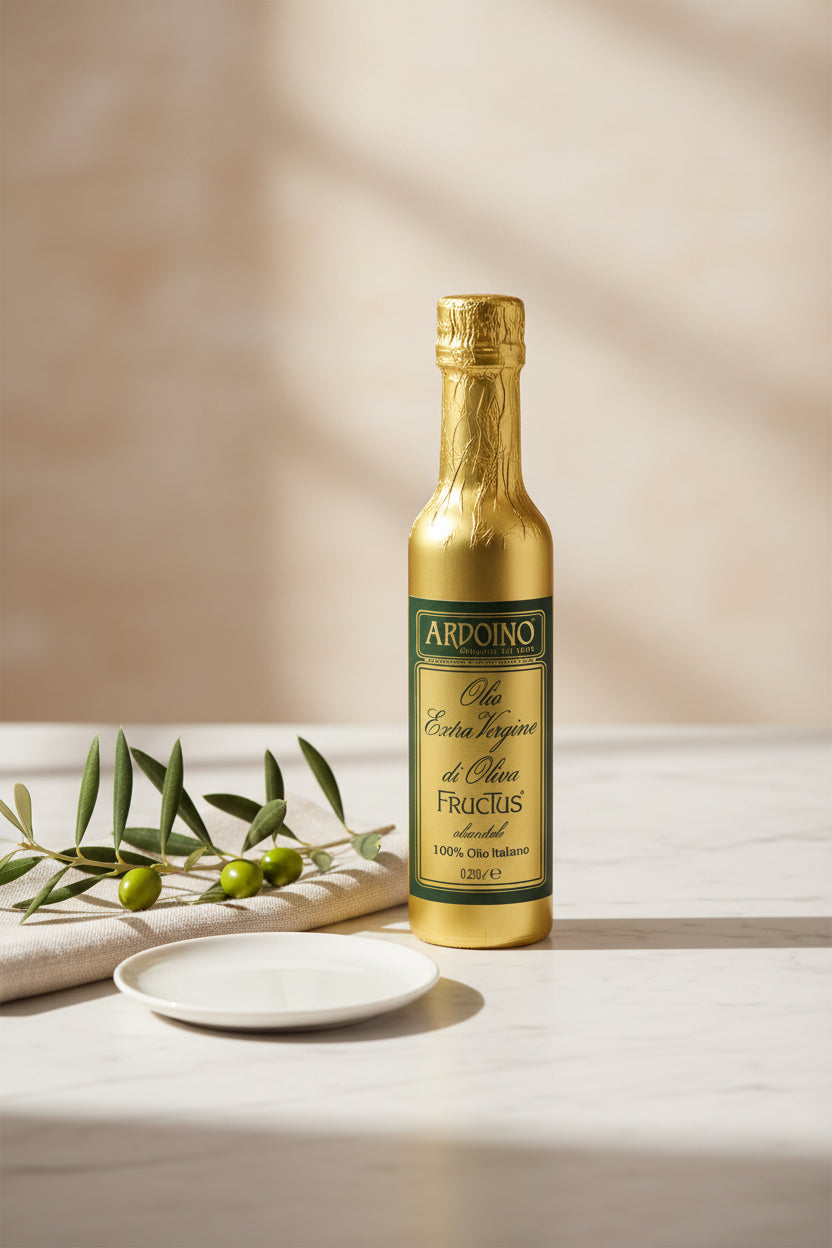
"First cold pressed", "cold extracted", "extra virgin" - these terms pile up on olive oil labels. Yet, nine out of ten consumers don't know what they truly mean, or which one matters. This guide unravels the legal definitions, modern extraction methods, and explains why a true cold-pressed extra virgin olive oil can be recognized at first glance, and with the first taste.
At FOODHUB, we work with premium Italian oils (Ardoino, Fructus, Vallaurea, Nyons PDO). This guide gives you the keys to understand what distinguishes these products from the rest.
Legal definition: "cold pressed" vs "cold extracted"
Since EU Regulation 1019/2002, two strictly defined terms coexist on virgin olive oils:
"Cold pressed"
Reserved for oils obtained by traditional mechanical pressing (hydraulic press on mats), at a temperature not exceeding 27 °C. This is the historical method, rarely used today in modern mills.
"Cold extracted"
Refers to oils obtained by centrifugation or percolation, also at a maximum of 27 °C. This is the modern method, dominant in 95% of high-end Italian and French mills.
Both terms guarantee the same critical temperature threshold: never above 27 °C. Above this, volatile aromatic compounds, antioxidant polyphenols, and polyunsaturated fatty acids degrade.
Steps of the first mechanical extraction
1. Harvesting (October to December)
Olives picked by hand or with vibrating combs, never collected from the ground. The harvest time is critical: still-green olives = fruitier and more bitter oil (high polyphenol content), ripe olives = smoother and more fluid oil (fewer polyphenols, more fat content).
2. Sorting and washing
Removal of leaves, twigs, damaged olives. Washed with cold water. Ideally on the same day as harvesting, as olives oxidize quickly.
3. Malaxation
The olives are crushed into a paste. This paste is then gently malaxed for 30 to 60 minutes at 25-27 °C. Malaxation allows oil droplets to gather. The shorter and cooler the malaxation, the more polyphenols the oil retains (the bitter and pungent antioxidants).
4. Centrifugation
The paste is passed through a horizontal centrifuge (decanter), which separates three phases: oil, vegetable water, pomace. The oil is then refined by a second vertical centrifugation.
5. Storage
The oil is stored in stainless steel tanks away from light, air, and heat. Ideally under an inert atmosphere (nitrogen). Bottled in opaque containers on demand, to preserve aromas.
Why cold preserves polyphenols
Polyphenols (oleuropein, hydroxytyrosol, oleocanthal) are the key molecules in extra virgin olive oil. They provide:
- The characteristic bitterness on the palate.
- The pungency at the back of the throat.
- Herbaceous aromas (cut grass, artichoke, almond, green tomato).
- Documented health benefits (anti-inflammatory, antioxidant, cardiovascular protection).
These compounds are thermolabile: they degrade above 30 °C. Oil extracted at high temperatures (a less expensive process but prohibited for "extra virgin") would lose 40 to 60% of its polyphenols.
The quality pyramid: extra virgin vs. virgin vs. lampante
| Category | Max Free Acidity | Defects | Use |
|---|---|---|---|
| Extra Virgin | 0.8% | None (mandatory panel test) | All uses, tasting |
| Virgin | 2.0% | Some defects tolerated | Cooking, frying |
| Lampante | > 2.0% | Significant | Not edible, requires refining |
| Olive Oil (refined) | 1.0% | Chemically refined | Neutral cooking |
The "extra virgin" designation guarantees three things: acidity ≤ 0.8%, no organoleptic defects, mechanical extraction only (no solvent). This is the top of the legal pyramid.
How to read a label in 30 seconds
- "Extra virgin" designation: mandatory for high-end products.
- "Cold pressed" or "Cold extracted": indicates adherence to the 27 °C threshold.
- Harvest date ("vintage"): critical. Olive oil loses 50% of its aromas after 18 months. Prioritize the most recent harvest.
- Precise origin: "100% Italian", "PDO Riviera Ligure", "AOC Nyons". A vague mention like "EU origin olive oil" means a blend from several countries.
- Opaque bottle: light oxidizes quickly. Prefer dark tinted glass or metal container.
- Measured polyphenols: some high-end oils display their polyphenol content (mg/kg). Above 250 mg/kg, the oil benefits from the European health claim.
5 common mistakes to avoid
- Buying oil in a transparent bottle exposed to store light.
- Cooking at very high temperatures with high-end extra virgin, wasting aromas. Use classic virgin for cooking, keep extra virgin for finishing.
- Storing near the stove, ambient heat degrades it. Keep in a cool, dark cupboard.
- Opening a bottle for too long: an opened extra virgin keeps optimally for 2 to 3 months, 6 months maximum.
- Confusing "first cold pressed" with absolute quality: the mention is only a technical threshold, not a guarantee of excellence. The producer's know-how is just as important.
FAQ, Cold Pressing and Olive Oil
"First cold pressed": what does this term really mean?
Historically, olives were pressed several times: the first pressing yielded fine oil, subsequent pressings produced lower quality oils. With modern centrifuges, the concept of "first pressing" is obsolete; we no longer press, we centrifuge. The term "first cold pressed" is only allowed for oils obtained by traditional mechanical pressing (rare). For others, we speak of "cold extraction".
Is extra virgin olive oil good for cooking?
Yes, up to 180-190 °C (smoke point of quality extra virgin). But it loses its aromas above 80 °C. Optimal strategy: use a basic extra virgin for cooking, and a high-end extra virgin only for raw finishing (carpaccio, salad, steamed vegetables).
How to evaluate an oil by tasting?
Pour into a small glass, warm with your palm for 30 seconds, smell (herbaceous, fruity aromas), taste by inhaling air to reveal the bouquet, feel the bitterness on the center of the tongue, the pungency at the back of the throat. A bland or rancid oil is a defect.
What is the ideal shelf life?
18 months after harvest, unopened. 2 to 3 months once opened. The best-before date ("DLUO") is calculated from bottling, but the harvest date is what really matters.
Why do some oils sting at the back of the throat?
This pungency comes from oleocanthal, a polyphenol that acts like ibuprofen on taste receptors. The richer the oil in oleocanthal, the more it stings, and the richer it is in healthy compounds. This is the signature of early oils (still-green olives).
Available on FoodHub
Extra virgin olive oil, cold pressed
🫒 Fructus 100% Italian Extra Virgin Olive Oil€9.26 Add to cart →
Les coulisses, les arrivages et les recettes en vidéo :
@foodhubsupplyÀ lire aussi · Huile


