

L'Univers FOODHUB · Guide
How to Choose Your Italian Olive Oil: The Guide Nobody Gave You
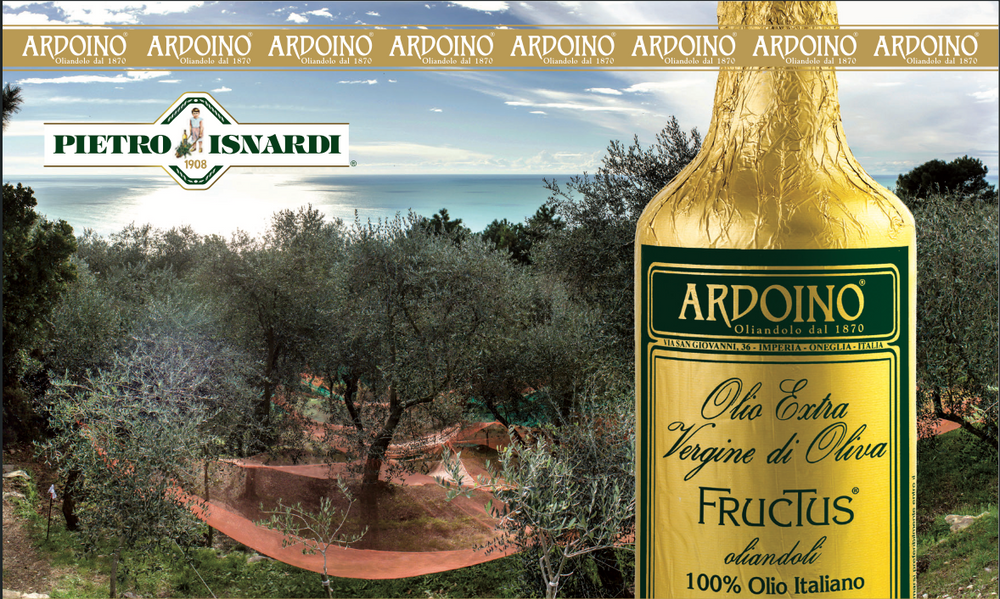


Pietro Isnardi & the House of Ardoino: a lineage of excellence
Since 1908, the Isnardi family has grown and pressed Taggiasca olives on the steep hillsides of Liguria. Their oils — sold under the Ardoino, Vallaurea and Fructus labels — embody the very best of Italy: meticulous cold pressing, olives picked at full ripeness, and a delicate fruitiness that lifts every dish without ever overpowering it.
Why choose a Ligurian olive oil?
In France, Liguria is not the best-known region for olive oil, and that is precisely its strength. While Tuscany and Sicily dominate the shelves, Ligurian producers work out of the spotlight, perfecting their craft generation after generation. The Taggiasca olive, a local variety, yields a delicate, fruity oil — a far cry from the grassy or peppery profiles you may be used to.
That finesse is no accident. It comes from a late harvest, when the olives reach full ripeness, and from cold pressing that preserves every aromatic nuance. The result? An oil that blends harmoniously into your dishes without dominating them.
How to recognize a truly exceptional oil
Before you choose, ask yourself three simple questions:
- Where does it come from? A traceable oil, with a named producer and a specific region, is always better than an anonymous blend.
- How was it pressed? Look for the words “cold-pressed” or “first cold pressing.” That is your guarantee the aromas have not been damaged by heat.
- When was it produced? Olive oil is at its best within 12 to 18 months of harvest. The older it gets, the more its aromas fade.
The three signatures of the House of Ardoino
Vallaurea, Ardoino and Fructus represent three complementary approaches to Ligurian olive oil. Vallaurea offers the classic purity of the Taggiasca — delicate fruit, a lightly bitter finish, perfect with fish and vegetables. Ardoino, the historic brand, embodies family tradition in all its rigor. Fructus, finally, explores infusions — orange, lemon, herbs — for those seeking an oil with character.
Each deserves its place in your kitchen, depending on your mood and your dishes.
How to use it every day
An oil this good doesn’t hide in the kitchen. Drizzle it over fish soup, fresh pasta or a salad of ripe tomatoes. Use it for dipping toasted bread. Finish a dish with it, never at the start of cooking — heat would destroy its subtle aromas.
And if you are tasting it for the first time, try it on its own, from a spoon. It’s the best way to understand what makes it different.
Vallaurea: our ultimate benchmark
100% Taggiasca, golden in color, round and long on the palate, Vallaurea is made to shine raw. Drizzle it over burrata, a fish carpaccio or a chilled vichyssoise — that is where it reveals all its finesse. Its delicate fruit and lightly bitter finish never try to dominate; they accompany, elevate, complete.
Fructus Aurantium: the bold one
More singular, co-pressed with fresh oranges, Fructus Aurantium follows a different logic. It is designed for desserts, raw fish and pastries that call for a sunny touch. Its sweet, luminous profile turns a simple cake into an experience, or adds an unexpected dimension to a sea bream tartare.
Two oils, two uses, one shared obsession with quality.
Les coulisses, les arrivages et les recettes en vidéo :
@foodhubsupply


