

L'Univers FOODHUB · Guide
Japanese soy sauce: Tamari, Shoyu, pure Tamari, the complete guide
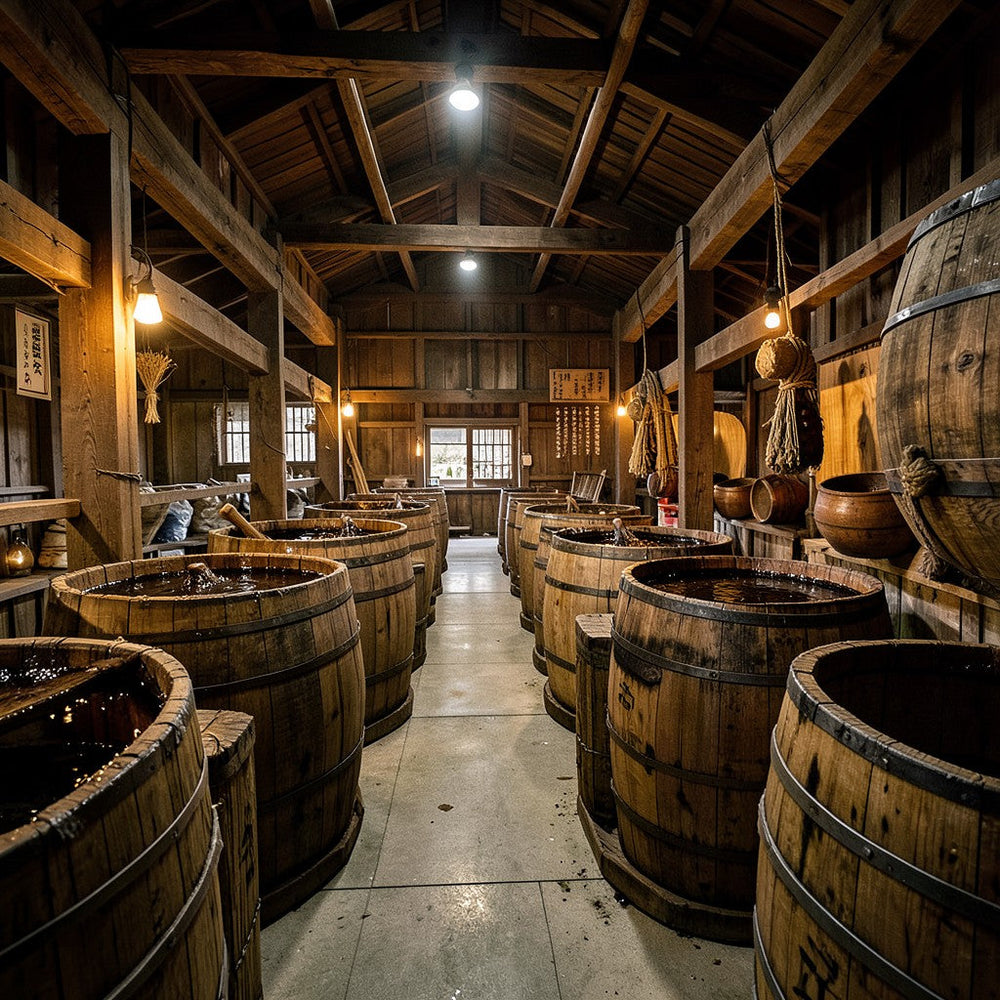
In the soy sauce aisle, you'll see a half-dozen labels: soy sauce, shoyu, tamari, gluten-free tamari, light soy sauce, dark soy sauce… All contain fermented soybeans, all look visually like a dark brown liquid. Yet, these products differ radically in their composition, taste, and culinary use.
At FOODHUB, we work with two Japanese artisans, Yamakawa and Kaneiwa, who represent the absolute excellence of traditional soy sauce. This guide explains how to choose, how to use, and why everything you find in supermarkets is probably very far from the real product.
Origin: How Japanese Soy Sauce Was Born
Modern soy sauce descends from an ancient Chinese condiment, jiang, attested for over 2,500 years. In Japan, it took the form of tamari in the 7th century: a byproduct of miso production (fermented soybean paste). When miso paste is pressed, a brown liquid flows out, which is tamari, literally meaning "what accumulates."
In the 17th century, master brewers in the Kansai region developed a variant: by adding wheat to soybeans before fermentation, they obtained a lighter, sweeter, more versatile sauce. This is shoyu, which became the standard soy sauce of Japan.
Shoyu: The Standard Japanese Soy Sauce
Shoyu (醤油) is made of four ingredients: soybeans, wheat, salt, water. Fermentation follows a precise protocol:
- Koji preparation: soybeans are cooked, and wheat is roasted. The mixture is inoculated with the fungus Aspergillus oryzae ("koji"), which produces enzymes that digest proteins and starch. 3 to 4 days at 30 °C.
- Brining (moromi): the koji is mixed with brine (water + 17 to 19% salt). Lactic and alcoholic fermentation develops for 6 to 24 months, or even 36 months for premium sauces.
- Pressing and filtering: the fermented paste is pressed to extract the liquid. Gentle pasteurization, bottling.
The typical soybean/wheat ratio for shoyu is 50/50. Wheat provides sweetness and malty aromas. The result: a balanced, sweet-savory, deep but light sauce.
Tamari: The Wheat-Free Version
Tamari (溜まり) follows the shoyu process but completely removes wheat (or uses a minimal dose of maximum 5%). This changes everything:
- Denser, almost syrupy texture.
- Darker, almost black color.
- More intense, more powerful umami flavor, less sweet.
- Gluten-free, suitable for special diets and intolerances.
Traditional tamari is also the longest to produce: 24 to 36 months of fermentation, sometimes more for exceptional houses. Yamakawa Tamari gluten-free soy sauce represents the archetype of this category, aged for a long time in wooden barrels.
"Pure" Tamari: The Artisanal Rarity
Beyond standard tamari, some houses produce "pure" tamari (genryū): 100% soy, no residual wheat, minimum 36 months fermentation in traditional cedar barrels. Production is confidential (a few hundred liters per year for some houses). The result is a sauce with extreme aromatic depth, to be used only as a finishing touch, a dash is enough.
Kaneiwa soy sauce aged 3 years in wooden barrels belongs to this exceptional category.
How to Choose: 5 Quality Criteria
1. Long Fermentation (minimum 6 months)
Most cheap industrial sauces are made by chemical hydrolysis of soybeans in a few hours, with added caramel coloring, flavor enhancers, and preservatives. Check the label: "natural fermentation" or "traditionally brewed." If fermentation is not mentioned, avoid it.
2. The Fermentation Method
"Wooden barrel fermentation" (kioke) or "enameled stainless steel tank fermentation" indicates traditional methods. Japanese cedar barrels are living organisms: they house microorganisms unique to each cooperage. This is what gives each house its aromatic signature.
3. Short Ingredient List
A real soy sauce contains 4 ingredients: soybeans, wheat (or none for tamari), salt, water. Period. If you read "corn syrup, monosodium glutamate, caramel color, potassium sorbate," it's an industrial imitation.
4. Visible Koji and the Mention "Naturally Brewed"
The best houses mention the koji strain used, sometimes the vintage, and specify the fermentation duration. This is a guarantee of transparency.
5. Country of Origin
Chinese soy sauces are often excellent for wok cooking, but their profiles differ (sweeter, saltier, sometimes more acidic). For authentic Japanese cuisine (sushi, sashimi, yakitori), choose a Japanese sauce.
Culinary Uses: What Changes Everything
Shoyu: The Versatile One
Anything that requires balance: marinades, vinaigrettes, wok sauces, stir-fries, ramen broth, sushi, and sashimi. It's the everyday sauce.
Tamari: The Concentrated One
Denser, so dose more carefully. Ideal for: tempura dipping, fish glazes, reduced sauces, finishing dishes where umami should dominate. Essential in gluten-free cooking.
Pure Tamari 36 Months: The Finishing Touch
A dash on sashimi, Wagyu carpaccio, a soft-boiled egg, a slice of buffalo mozzarella. Never for cooking, heat degrades complex aromas.
FAQ, Japanese Soy Sauce
Tamari vs Shoyu: Which to Choose?
For everyday versatility: shoyu. For gluten-free cooking or for preparations that require intense umami depth: tamari. Ideally, have both at home, for different uses.
How Long Does Soy Sauce Keep?
An unopened artisanal soy sauce keeps for 2 to 3 years at room temperature. Once opened, it remains optimal for 6 to 12 months in the refrigerator; beyond that, the aromas begin to oxidize. Industrial pasteurized soy sauce lasts longer but never improves.
Why are some sauces €2, others €25?
Long fermentation (24-36 months) is expensive in terms of storage, evaporation loss, labor, and certification. Wooden barrels are investments amortized over decades. An industrial sauce hydrolyzed in 4 hours costs 100 times less to produce.
Is Tamari Really Gluten-Free?
100% soy tamari is. But some "standard" tamari contains 5 to 10% wheat. Always check for certified "gluten-free" on the label if you have a medical intolerance.
Should Soy Sauce Be Diluted?
Never. The concentration is calibrated for direct use. To soften, add mirin, sugar, dashi, not water.
Available on FoodHub
Tamari Soy Sauces, Barrel-Aged
🥢 Kaneiwa Tamari Aged 3 Years 150ml€9.23 Add to cart →
🍶 Yamakawa Gluten-Free Tamari 3 Years 300ml€9.60 Add to cart →
Les coulisses, les arrivages et les recettes en vidéo :
@foodhubsupply


